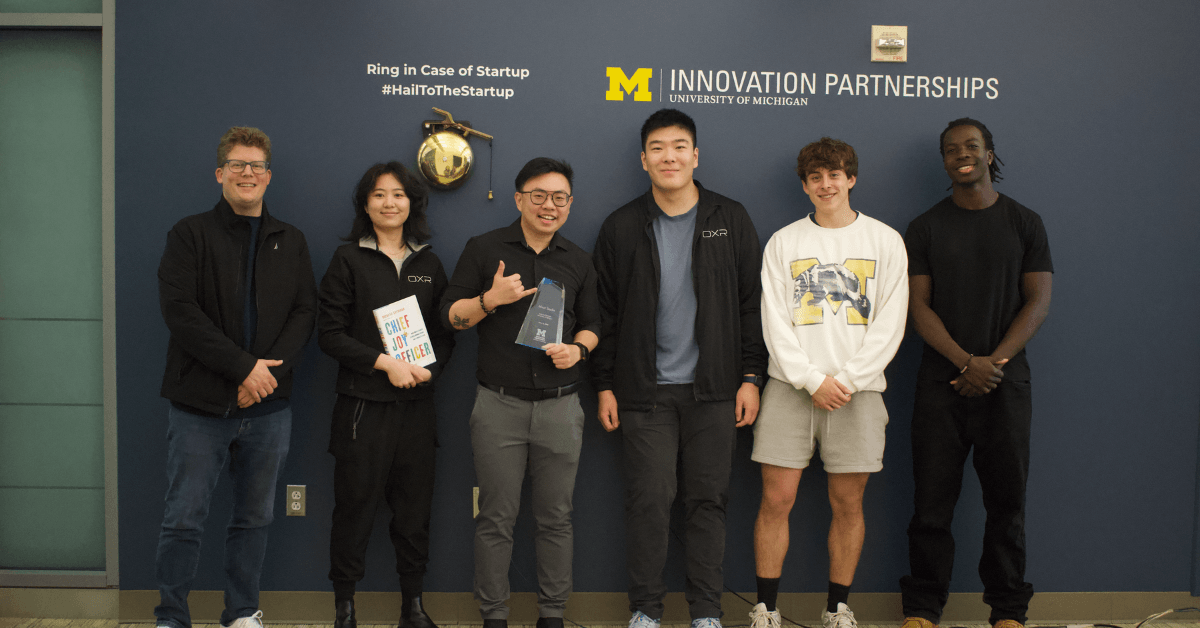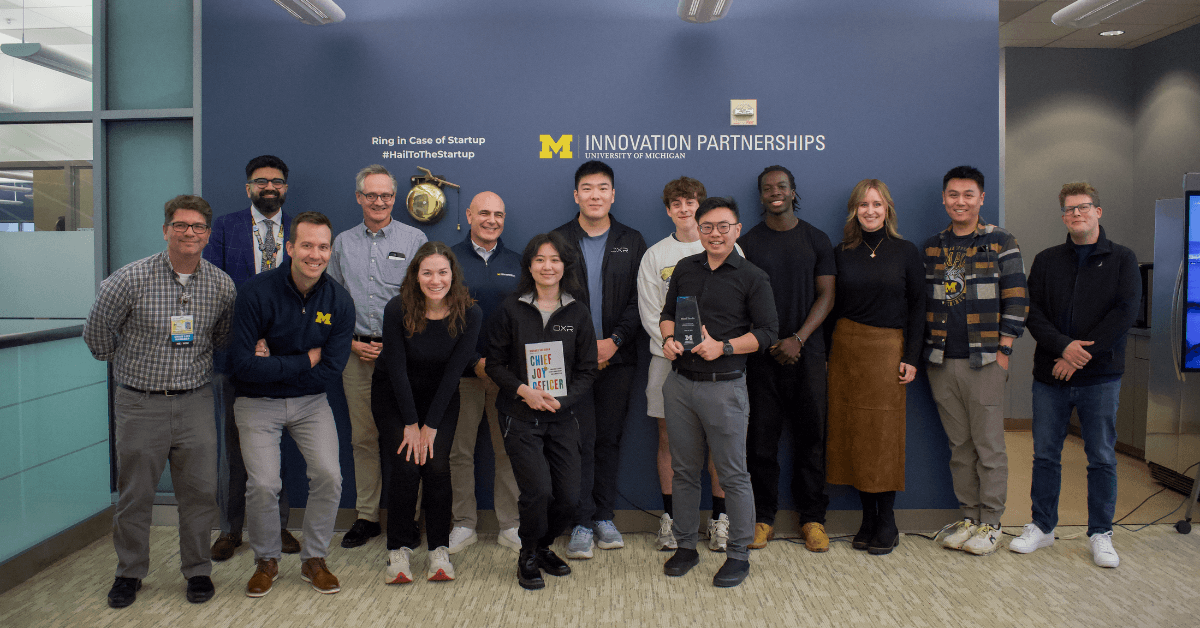
Dr. Kelly Sexton, Associate Vice President for Research – Innovation Partnerships and Economic Impact, opened the ceremony by recognizing Mixel Studio’s growth through the university’s innovation ecosystem and highlighting the passion, energy, and persistence demonstrated by founder and CEO Chiao Lin. Drew Bennett, Senior Licensing Strategist at Innovation Partnerships, reflected on how Dr. Michael Nebeling first introduced the team’s invention to the office and highlighted the uniqueness of its technology. Jamal Mosallam, Mentor-in-Residence, also joined the celebration, representing the broader network of university mentors supporting emerging startups.
Rather than delivering a conventional technology demonstration, Lin used the occasion to reflect on the people, experiences, and lessons that shaped Mixel Studio’s entrepreneurial journey. The story began in Dr. Michael Nebeling’s advanced AR/VR course at the University of Michigan School of Information (UMSI), where Lin and co-founder Anhua Wu developed their foundation in XR design and technology. From early projects such as CodeBlock, the team began exploring how immersive technology could address real-world needs. Collaboration with JJ, Manager of Therapeutic Gaming and Patient Technology at C.S. Mott Children’s Hospital, introduced the founders to the practical constraints of designing experiences for real users. Through an introduction by Steve Janssens, Director of Student & Alumni Programs, Lin subsequently joined the Zell Entrepreneurs Program, gaining critical exposure to venture creation, fundraising, pitch development, investor due diligence, and the broader venture capital ecosystem. These experiences ultimately contributed to the team’s evolution into OXR, a platform focused on making spatial computing more accessible and collaborative.
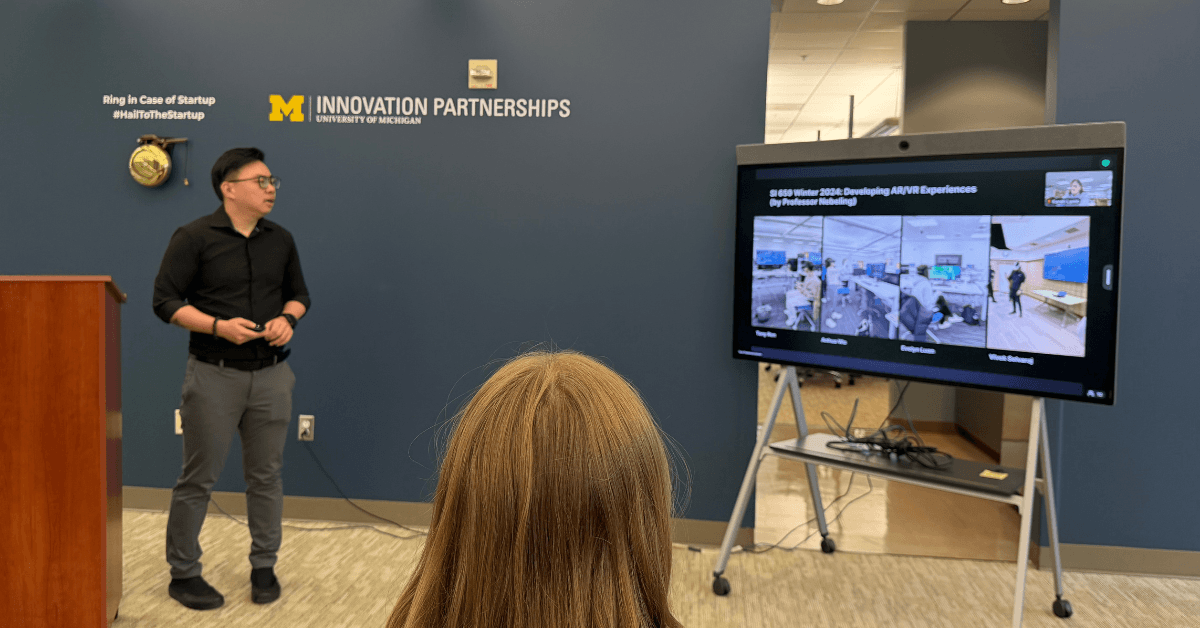
The presentation also highlighted how collaboration, applied research, and real-world validation have remained central to Mixel Studio’s development. Working with Dr. Kamran Mirza, Professor of Pathology and Assistant Chair for Education at Michigan Medicine, the team pursued interdisciplinary research involving institutional review board (IRB) approval, empirical evaluation, and the preparation of academic publications. Karen Lamb, an Upper School Science Teacher at Detroit Country Day School, joined the ceremony virtually and was recognized for welcoming the team into her classroom for real-world pilot , providing invaluable feedback on the practical limitations and educational opportunities of XR technology. Lin also acknowledged Angie Zill, Engaged Learning Programs Manager and Adjunct Lecturer at UMSI, for helping translate these experiences back into student learning through Design Jam 2.0, organized in collaboration with JJ to encourage students to design beyond classroom assumptions and engage with real-world constraints. The celebration also welcomed current and former team interns Tiger Zhang, John Hawver, and Kian Odongo, recognizing their contributions to Mixel Studio’s continued development.
In closing, Lin expressed heartfelt gratitude to the mentors, educators, collaborators, and teammates who had shaped not only the company but also his personal growth as a founder. “We would not be here today without the support of the University of Michigan and everyone who has helped us along the way,” said Lin. “This was never a planned journey. Every opportunity, every challenge, and every person who believed in us has helped shape who we are today. We are deeply grateful for that support, and we will continue to give our very best. We firmly believe that spatial computing will play a critical role in the future, and we are committed to making that future more accessible to everyone.” The ceremony concluded with Dr. Sexton presenting Mixel Studio with a commemorative plaque recognizing its contribution to an extraordinary year for university entrepreneurship. In fiscal year 2026, the University of Michigan launched a record 40 startups — the highest annual total reported by a U.S. university, based on publicly available data. Sexton congratulated the team for helping make that milestone possible, and attendees gathered for a group photograph to commemorate the occasion.
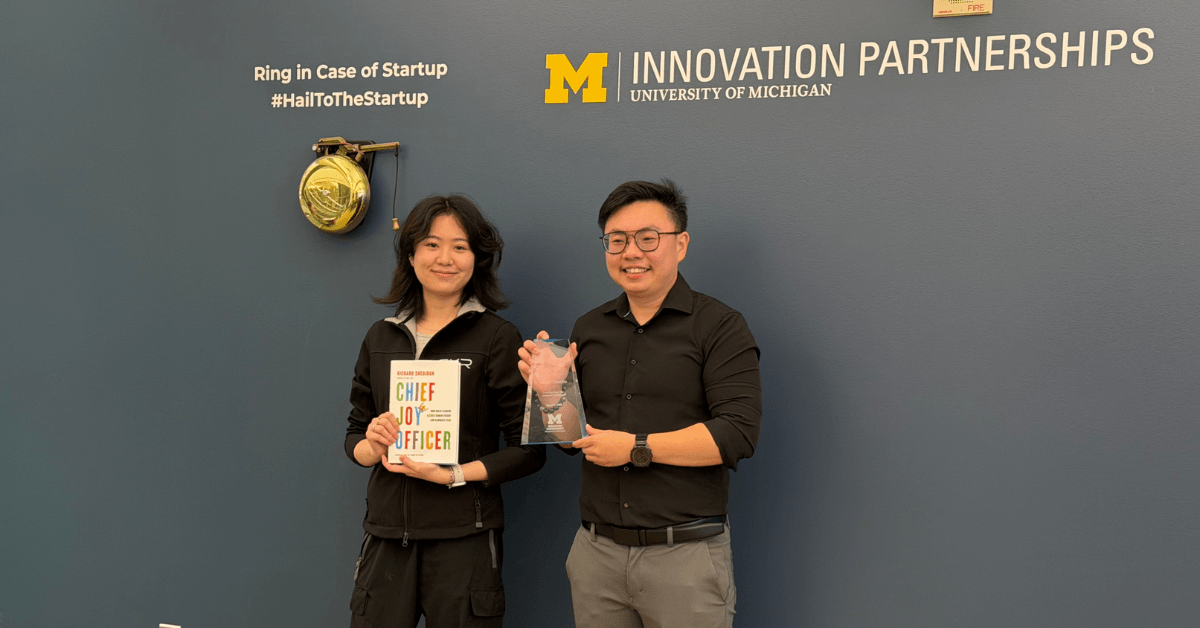
Mixel Studio’s journey reflects the potential of a university spinout: transforming classroom learning into research, research into innovation, and innovation into real-world impact. From its origins in the University of Michigan’s XR classrooms to interdisciplinary research partnerships, entrepreneurial programs, technology commercialization, and the development of OXR, the company embodies the collaborative spirit of the university’s innovation ecosystem. As Mixel Studio enters its next chapter, it remains committed to advancing human-centered XR innovation, lowering barriers to spatial computing, and making immersive technologies more accessible, practical, and meaningful for people across industries, education, and everyday life.