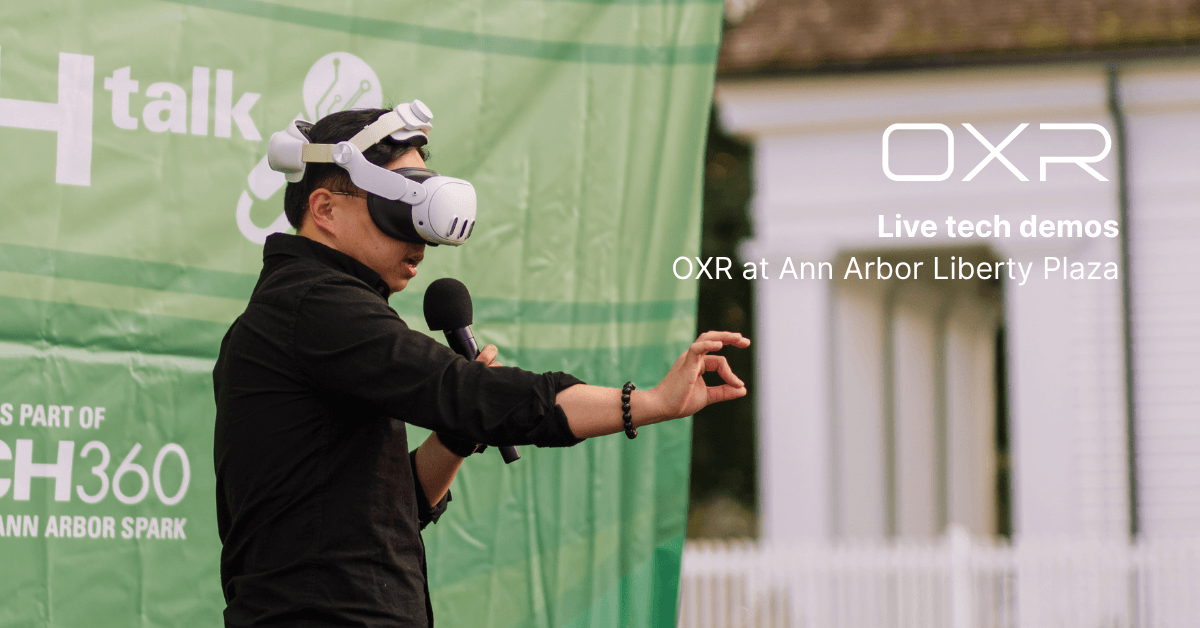
Rather than presenting a prerecorded demonstration, OXR showcased its cross-device spatial presentation technology live with audience participation. The team brought two XR headsets, one for the host and another for an audience participant, while inviting additional attendees to join the same spatial session directly from their smartphones. Despite limited internet connectivity at the outdoor venue, OXR’s optimized platform successfully supported participants joining across devices and experiencing real-time synchronization. The demonstration highlighted how a single host could orchestrate a shared spatial experience across XR headsets and everyday mobile devices, making immersive experience possible without requiring everyone to own specialized hardware.
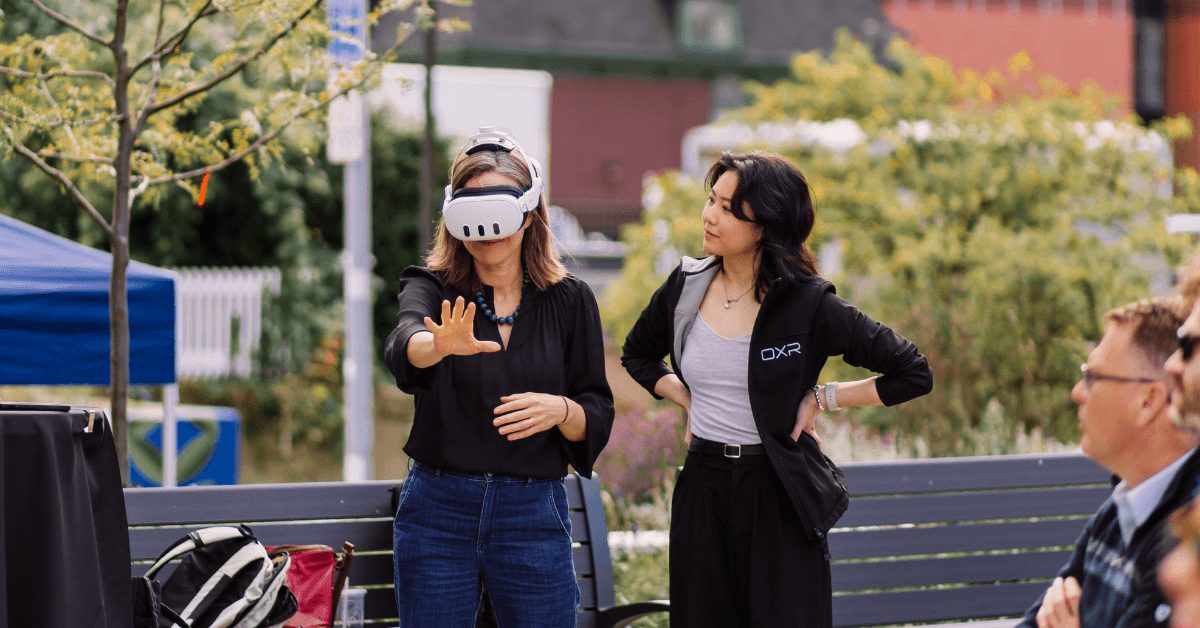
During the live Q&A, the event host raised an important question: How much time can OXR save users, and how accessible is the technology to people without technical backgrounds? Lin explained that creating XR experiences traditionally requires specialized development skills, including working with Unity or Unreal Engine, integrating SDKs and interaction toolkits, and configuring headsets for developer access. For most non-technical users, these requirements present significant barriers.
“Traditionally, if you’re not a developer, your chances of building an XR experience yourself are almost zero. With OXR, we’re changing that. Anyone can visit our website, drag and drop their 3D content, use our templates and widgets to create an interactive experience, and instantly bring it into an XR headset. Our goal is to make spatial computing something anyone can create with, not just developers.” — Chiao Lin, Founder & CEO of OXR
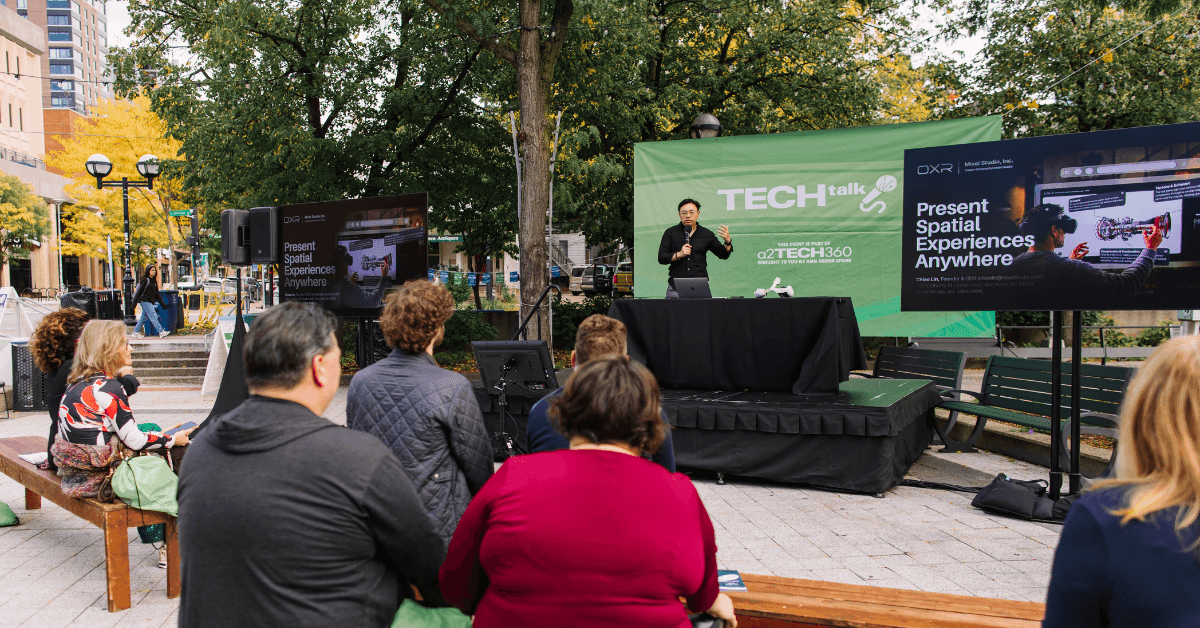
The demonstration sparked enthusiastic engagement from the audience, with attendees asking thoughtful questions about the technology and its potential applications. As XR devices become increasingly lightweight, wearable, and integrated into everyday life, OXR envisions becoming an essential platform for creating, presenting, and communicating spatial content across devices. We are grateful to Ann Arbor SPARK and the a2Tech360 organizers for the opportunity to showcase our technology, and especially to everyone who joined our live demonstration, participated in the experience, and engaged with us through questions and conversations. We are excited to continue bringing the future of spatial computing closer to everyone.